My Intuitive Slow Stitching Journey

I never expected to enjoy creating intuitive slow stitched pieces as much as I do. The process feels like a quiet conversation between me and the fabric, where every stitch happens naturally without a strict plan.
My first piece in this series comes with a pattern and a detailed guide. That experience was rewarding, but now I’m diving into the second piece in my intuitive slow stitching journey, which is quite different. This time, there’s no pattern, just a blank canvas waiting to be filled intuitively with fabric scraps, embroidery, embellishments, and whatever my mood inspires. I get to choose the colors, and I’ll be guiding you through this journey as well.

Starting the Second Piece Without a Pattern
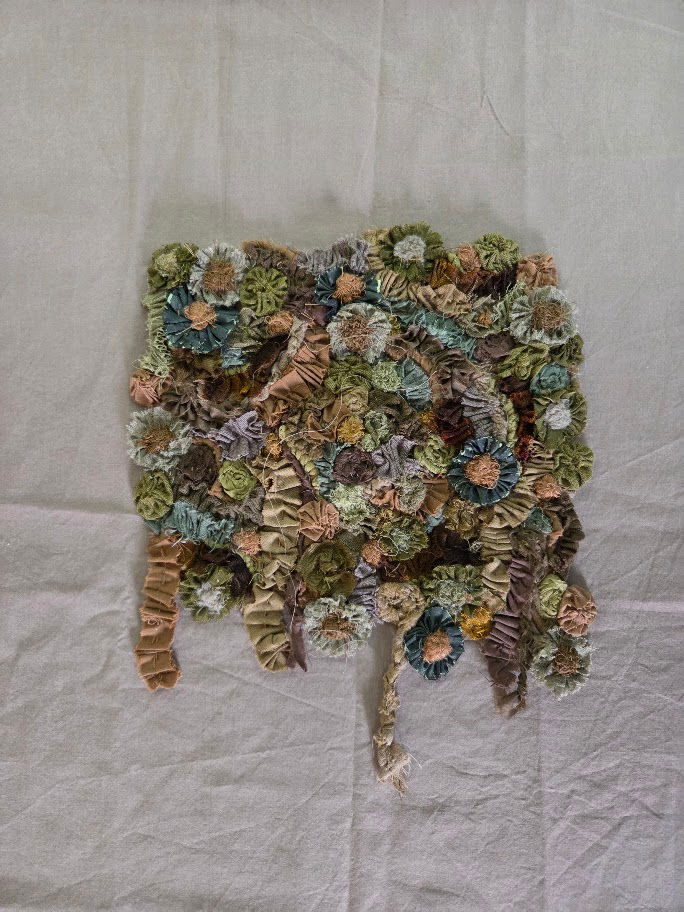
Moving from a pattern to a freeform approach has been both different for me and challenging. Without a pattern, I need to rely entirely on intuition and the feel of the fabric collage in front of me. Though I do find that even if its wild, for me the colors still have to be balanced, so I do subconciuosly work with intention, creating a pattern of a sort even while dancing with the fabrics, exploring textures, colors, and stitches in a way that feels personal and spontaneous.

I don't want this to be a planned piece, so I am just doing, and when I find myself beginning to analyze it I am putting it down.
Its a test to see what a random piece can look like.

Its not that easy for me to do. Its a work in motion, and not an easy one for me to create randomly.
Sometimes its soothing other times its not.
It’s a different kind of creativity - one that slow stitchers will appreciate because it encourages patience and presence.

The base piece for the second work is finished, but now I face a new dilemma: choosing the background fabric.
When there are too many options, the decision becomes harder. I’ve noticed that limiting color choices actually makes the creative process smoother. It’s easier to build harmony and balance when the palette is smaller.
Yet, for this piece, I have a larger range of background colors to consider, and the colors in the embroidery change depending on which background I lay them on.
The Challenge of Fabric Choices
Fabric collage artists often know this feeling well. The fabric you choose as a background can completely change the mood of the piece.I’ve been laying my stitched elements on different fabrics to see how the colors shift and interact.
These are the 3 different bacground color options. I know which one I will be choosing. What would you choose as a background color?


This process is a reminder that fabric collage is not just about the pieces themselves but also about how they relate to each other.
The background fabric influences the overall feel of the work.
My Intuitive Slow Stitching Journey
Intuitive slow stitching is more than just a technique; it’s a way to slow down and connect with the materials. It’s about letting go of control and trusting the process. For slow stitchers, this approach offers a chance to explore creativity without pressure. You don’t have to follow a strict pattern or worry about perfection. Instead, you respond to the fabric, the thread, and your own feelings in the moment.
Preparing for the Third Piece
While I’m almost done with the second piece, my mind is already turning to the third. I plan to use the same fabrics but explore a different style. This will keep the series connected but still different.
Each piece is going to be different but the look will still be cohesive. I am using the same fabrics and threads and even though I am incorporating different techniques in the different pieces, the look of the series will be a unified one.
This ongoing exploration is part of what makes intuitive slow stitching so rewarding. Each piece teaches me something new about fabric collage, color, and my own creative instincts. It’s a slow, satisfying journey that I’m happy to share with other fabric artists and slow stitchers.
Tips for Navigating Fabric Choices
If you’re working on your own intuitive slow stitching projects, here are some practical tips I’ve learned:
Limit your color palette to avoid feeling overwhelmed. Start with a few colors and add more only if it feels right.
Test your embroidery pieces on different backgrounds before finalizing. This helps you see how colors interact.
Trust your instincts when choosing fabrics and stitches. Intuition is your best guide.
Embrace imperfection. The beauty of slow stitching lies in its organic, imperfect nature.
Take breaks to step back and look at your work from a distance. This can reveal new ideas or adjustments.
After creating the first 2 pieces in the series I can definitely say that for fabric artists and collage makers, intuitive slow stitching offers a unique way to combine texture, color, and handwork.
It’s a tactile, meditative process that encourages experimentation, introspection and relaxation. Unlike fast-paced crafting, it invites you to slow down and enjoy each moment with your materials.
Final Thoughts on My Slow Stitching Journey
Creating these intuitive slow stitched pieces has been a learning and satisfying experience. The shift from a patterned first piece to a completely freeform second one has expanded my creative horizons.
Choosing fabrics and colors mindfully has become a key part of the process, reminding me that sometimes less is more.
Slowing down and working only with my hands has definitely been a positive exercise in patience for me.
The first guide in the series is available here on the site
and here on Etsy


Comments